
Cambridge Pavers General Contractor in Yorba Linda: A Homeowner’s Guide
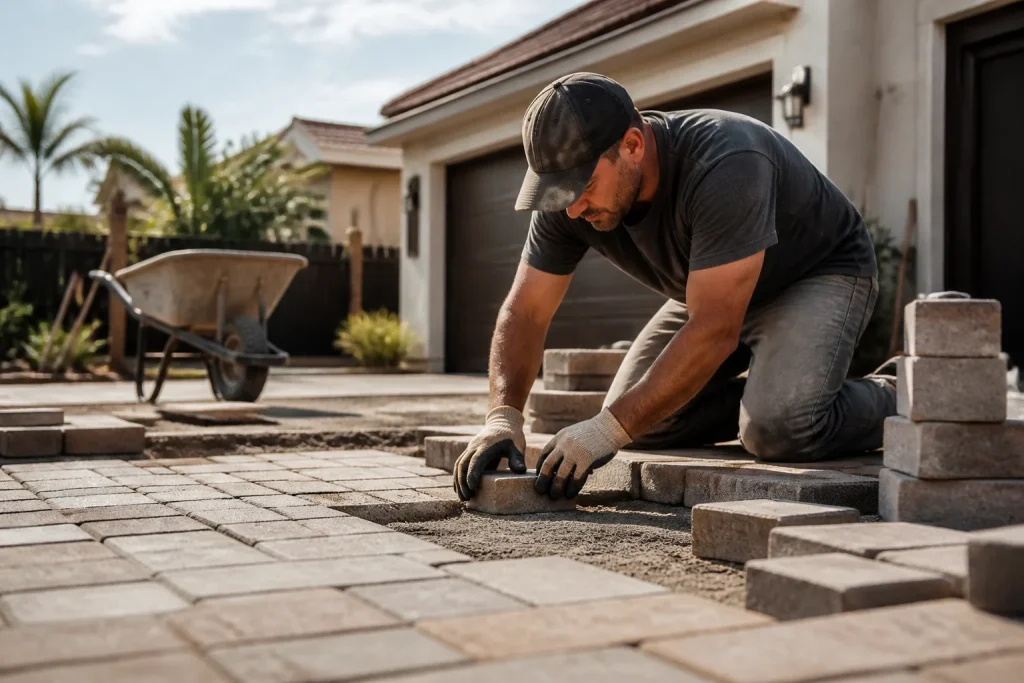
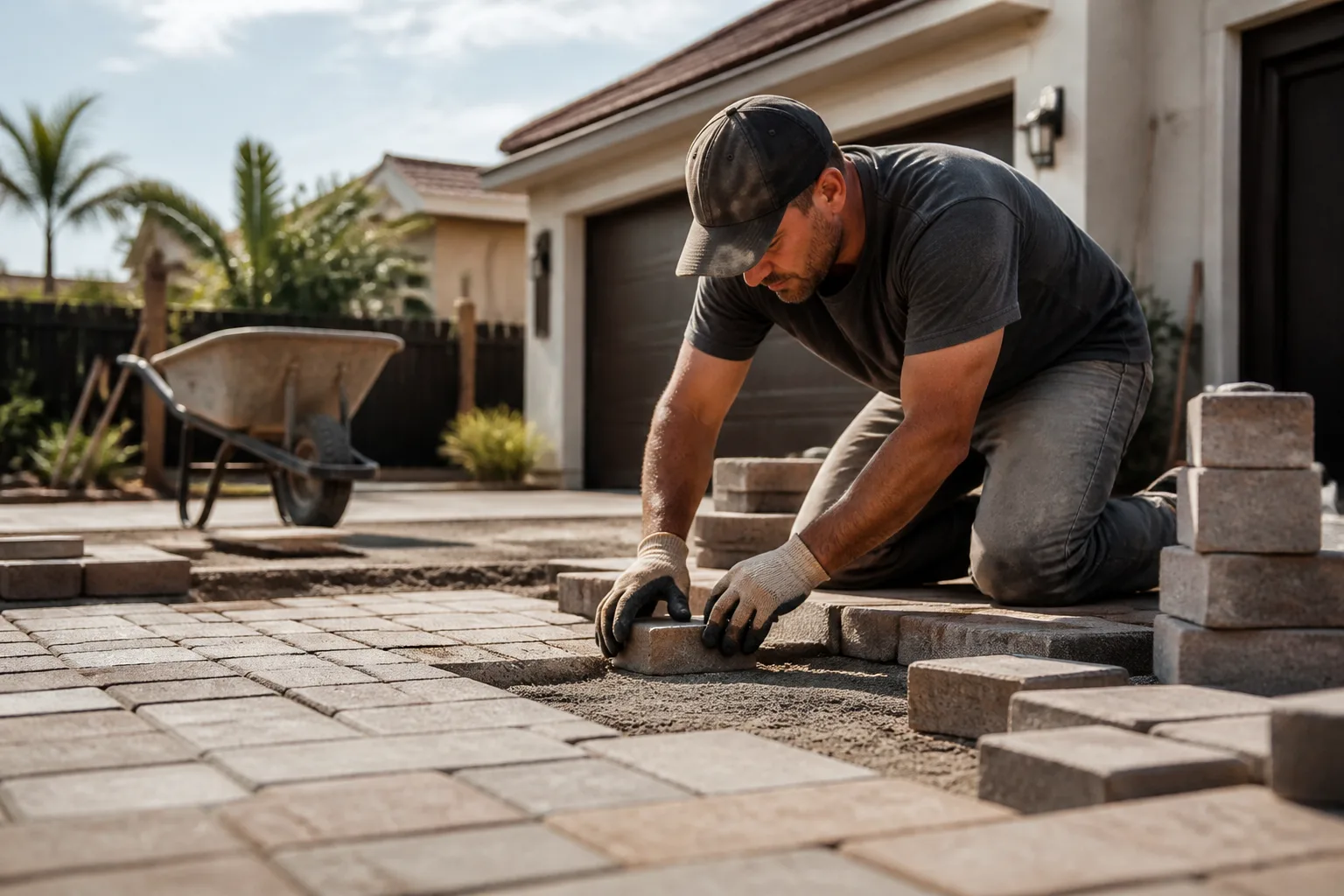
A Cambridge Paver project in Yorba Linda lives or dies by what happens underneath the pavers, not the pavers themselves. The product is excellent. The base prep, drainage planning, and edge restraint work are what determine whether your patio or driveway still looks flat and tight five years from now. If you’d rather skip the research and talk to someone who installs these systems weekly, call (877) 752-3951 for a free estimate.
Here’s the problem most homeowners don’t see coming. Yorba Linda sits on expansive clay soil. That soil swells when it rains and shrinks when it dries. A paver installation that meets the manufacturer’s minimum base depth will often fail prematurely here because the ground underneath moves more than the base can absorb. We’ve pulled up paver driveways in the hills above Yorba Linda Boulevard where the base was only four inches of road base over unamended clay. Two winters later, the edges had dropped nearly an inch. The pavers were fine. The preparation wasn’t.
Why Yorba Linda’s Clay Soil Demands a Deeper Aggregate Base
Most paver manufacturers publish base depth recommendations that assume reasonably stable soil. Yorba Linda’s soil is not reasonably stable. It’s classified as expansive clay in large portions of the city, particularly in neighborhoods east of the 241 and up toward the Chino Hills State Park boundary. That clay can expand and contract by 10% or more through wet and dry cycles.
What this means practically: a standard 4-inch compacted aggregate base under a patio in a city with sandy loam may work fine. In Yorba Linda, we typically recommend 6 to 8 inches of Class II road base, compacted in lifts, with non-woven geotextile fabric separating the native soil from the aggregate. The fabric prevents the aggregate from mixing into the clay over time, which is a principal cause of paver settlement in this area.
Before you sign a contract, ask your contractor three specific questions:
- What base depth are you proposing, and is it in writing on the quote?
- Are you using geotextile fabric between the native soil and the aggregate?
- How many compaction passes are you running, and with what type of plate compactor?
If the answer to the second question is “we don’t usually use fabric,” that’s a red flag for Yorba Linda soil. It’s not that the job will definitely fail without it. It’s that the contractor isn’t accounting for the single biggest variable on your property. A general contractor in Yorba Linda who works across hardscape, drainage, and grading should know this conversation by heart. If they look confused, get another bid.
We’ve also seen a related issue on sloped lots. Yorba Linda has plenty of homes built into hillsides, and a paver patio on a slope needs more than a deep base. It needs a properly keyed edge restraint and, in some cases, a retaining edge course set in concrete so the whole field doesn’t creep downhill over time.
Cambridge Paver Patterns and Edge Restraints on Sloped Lots
Cambridge makes a wide range of paver shapes and patterns, from classic three-piece systems to larger-format slabs. The pattern you choose isn’t just aesthetics. It interacts directly with slope and drainage. On a relatively flat patio, a standard herringbone or running bond pattern with flexible edge restraints is fine. On a sloped lot, interlocking patterns with tighter joints resist lateral movement better than larger-format pavers with wide gaps.
The edge restraint is where we see the most shortcuts. A proper Cambridge Paver installation requires a rigid edge restraint along every exposed perimeter. Most manufacturers accept aluminum or PVC edging with steel spikes, but on a Yorba Linda hillside, we prefer restraint systems anchored in a concrete toe or a soldier course of pavers set on a concrete bed. That’s the difference between an edge that holds and an edge that starts to wander after the first wet winter.
Here’s what to ask about edge restraints:
- Are you installing a rigid edge restraint on every exposed edge, including curves?
- On sloped sections, are you using a concrete-embedded restraint or a plastic spike-only edge?
- Are you extending the base at least 6 inches beyond the edge restraint before backfilling?
This is one of those details that never shows up in a brochure photo. Photos show pavers. They don’t show what’s holding them in place. And when the edge fails, the paver field next to it starts to separate, and suddenly you have a tripping hazard where your patio meets your lawn.
Hardscape, Irrigation, and Drainage: Three Systems That Must Talk to Each Other
A paver patio doesn’t exist in isolation. In almost every Yorba Linda backyard, the hardscape borders a planting zone, a lawn, or both. The irrigation for those zones and the drainage for the hardscape have to be designed together, or one will undermine the other.
The classic failure: a paver patio slopes toward a planter bed, the planter bed’s irrigation oversprays onto the paver edge, and over time water saturates the base at that edge. The base softens. The pavers drop. Now you have a birdbath at the edge of your patio, and the plants are dying because the contractor installed a non-permeable edge that blocked root growth.
We coordinate these systems because we install them. When we run a patio in a Yorba Linda backyard, we also handle the adjacent drainage, the irrigation adjustments, and often the fencing that ties into the hardscape perimeter. The alternative is hiring a paver subcontractor who does excellent paver work and then tells you to call an irrigation guy and a drainage guy and a fence company. You’re left coordinating three schedules and trying to figure out whose detail failed when water pools in the corner.
For home remodeling in Yorba Linda that extends into backyard spaces, the paver installation is frequently one piece of a larger exterior improvement. You might be replacing a sliding door, adding a pergola, fixing drainage, and laying pavers. If those are separate contractors, each one works to their own line and leaves the interfaces for you to manage. That’s the fragmented experience most homeowners dread, and it’s exactly what we designed our operation to avoid.
Cambridge’s Product Warranty vs. Your Contractor’s Installation Warranty
This section will save you from a painful misunderstanding. Cambridge Pavers offers a product warranty. It covers manufacturing defects in the paver itself, like cracking, spalling, or color inconsistency beyond normal variation. Many Cambridge products carry a lifetime warranty on structural integrity for residential applications, but you should verify the specific warranty for the product line you select.
What the product warranty does not cover: settlement, shifting, base failure, edge failure, drainage problems, and everything else that has to do with installation. Those are installation issues, and they’re covered only if your contractor provides an installation warranty in writing.
You need both. If a paver cracks in half for no apparent reason, that’s Cambridge’s problem. If your patio sinks two inches at the edge, that’s your contractor’s problem, and the only thing that makes it their problem is a written installation warranty with a defined term. Verbal assurances don’t count. “We stand behind our work” without a warranty document is a weather report: you can hear it, but you can’t build on it.
Ask for both documents before you sign. A contractor who hesitates to put the installation warranty in writing is telling you something important about how they handle callbacks.
Why a Full-Scope GC Produces a Cleaner Finish Than a Hardscape-Only Sub
Here’s the nuance most comparison guides miss. A hardscape-only subcontractor can install an excellent paver patio. That’s not the question. The question is what happens at the interfaces: where pavers meet siding, where a paver walkway meets a gate post, where a patio edge meets a downspout, where outdoor lighting conduits need to pass under the paver field.
Those interfaces are where projects get ugly. The paver guy finishes his work and leaves a gap at the gate post. The fence company comes later and fills it awkwardly. The electrician has to hand-dig under the finished patio because nobody thought about lighting before the pavers went down. The siding crew scratches the new paver edge with a ladder.
When one contractor owns the whole exterior scope, the sequencing works in the right order: underground utilities and drainage first, then grading and base prep, then pavers, then fencing and lighting that tie into the finished hardscape. Product selections get made together, so the paver color works with the fence color works with the home’s trim. You’re not the person standing in your backyard trying to coordinate three crews who don’t return each other’s calls.
Home renovation in Yorba Linda often involves exterior spaces, and we’ve learned through hundreds of projects that the finish details don’t happen by accident. They happen because someone drew the line all the way through, from the storm drain to the gate latch to the paver edge.
We ran a project in the Fairmont Hill neighborhood where the homeowner originally planned to hire separate contractors for a driveway, front walk, and fence replacement. The driveway and walk were Cambridge pavers. The fence was ornamental aluminum set on concrete pilasters. The interface between the paver walk and the fence posts required a specific detail: the paver base had to be complete before the pilasters were poured, or the pilasters would sit proud of the finished paver line. That’s a detail that only gets coordinated when one contractor is responsible for both elements. The homeowner saw the logic immediately once we explained it, and the finished result had clean lines from curb to gate with no filler pieces.
What Cambridge Pavers Actually Cost in Yorba Linda
Pricing depends on scope, access, and base conditions, but here are realistic ranges for this market:
- Paver patio (300 – 500 sq ft), standard base, flat lot: $18 – $28 per sq ft installed
- Paver patio on sloped lot with deeper base and concrete edge restraint: $25 – $38 per sq ft installed
- Paver driveway, full-depth base with fabric, concrete curb edges: $22 – $35 per sq ft installed
- Walkways and entry paths, including step work and drainage tie-ins: $20 – $32 per sq ft installed
The Yorba Linda premium comes from the base depth and the drainage work. You can find bids lower than these ranges. If so, check what’s under the pavers. A $14 per sq ft patio in this city is almost certainly built on a thin base over unamended clay, and you’ll be repairing it within three years. The pavers themselves cost roughly the same either way. The difference is the preparation you can’t see.
When you compare bids, normalize them by asking for the base spec, the edge restraint spec, and the drainage plan in writing. Two quotes can be $4,000 apart and both be honest; the question is whether the cheaper one includes the work that keeps the patio flat.
The Bottom Line
Cambridge Pavers are a proven product, and they work beautifully in Yorba Linda when they’re installed over a base that accounts for the city’s clay soil and on lots that account for slope and drainage. The product warranty is valuable. The installation warranty is the one that protects you from the failures you’re actually likely to experience.
The single most important step you can take is asking your contractor about base depth, geotextile fabric, and edge restraints before you sign. If they can answer specifically and put the details in writing, you’re talking to someone who installs pavers in this city, not just someone who installs pavers.
If you’re in Yorba Linda and planning a paver patio, driveway, or walkway, Sundance Contractors offers free estimates. Call (877) 752-3951 and we’ll walk your property, check your soil conditions, and give you a written line-item quote that specifies exactly what’s going under the pavers, not just what’s going on top of them.
Frequently Asked Questions
Most Cambridge Paver patios in Yorba Linda run between $18 and $38 per square foot installed, depending on slope, access, and base requirements. The higher end reflects deep bases with geotextile fabric and concrete edge restraints, which are common needs in this city’s clay soil and hillside lots. Call (877) 752-3951 for an exact quote on your project.
Pavers sink in Yorba Linda because the underlying expansive clay soil swells and shrinks with moisture changes, and an inadequate base or missing geotextile fabric allows the aggregate to migrate into the clay. A properly installed base in this city is typically 6 to 8 inches of compacted Class II road base over non-woven geotextile fabric.
No. Cambridge’s product warranty covers manufacturing defects in the pavers themselves, not settlement, shifting, edge failure, or drainage issues caused by improper installation. Those are covered only by your contractor’s installation warranty, which should be provided in writing with a defined term.
Yes, but the installation details differ from a flat lot. Sloped sections typically require interlocking patterns with tight joints, rigid edge restraints set in concrete, and in some cases a soldier course on a concrete bed to keep the field from creeping downhill. A contractor experienced with Yorba Linda hillsides will specify these details in the quote rather than treating it as an afterthought.
Written by the team at Sundance Contractors, serving Yorba Linda since 2018.
Need Construction Help?
Call Sundance Contractors - licensed & insured, here with fast after-hours help in Yorba Linda.
(877) 752-3951