
Last updated October 30, 2026
 Home additions & ADU
 Kitchen remodeling
 Bathroom remodeling
 Roofing
 Windows & doors
 Driveway & pavers
 Fence
Free written scope consultation - allowances, timeline, and change-order rules on paper before a single trade is scheduled
Construction Warning Signs: A Yorba Linda Homeowner’s Reference Guide
Most construction warning sign guides tell you what failure looks like after it’s already visible. This one is different. It’s built around the earliest observable signals specific to Yorba Linda home types, soil conditions, and climate patterns, the ones you can catch before they become a contractor’s emergency call. A hairline crack in a Yorba Linda stucco exterior is either cosmetic or structural depending on its orientation, location relative to window corners, and whether it appeared after a Santa Ana event or gradually. Those three details determine whether you call a painter or an engineer. We’ll walk you through exactly how to read those signals, what they mean, and when to act.
Quick Answer
Construction warning signs in Yorba Linda homes fall into two categories: cosmetic signals you can monitor and structural signals that demand immediate professional evaluation. The most common early warnings we see are diagonal stucco cracks at window corners, horizontal cracks at the foundation line, granule accumulation in gutters, door frames that no longer close square, and baseboard gaps that widen seasonally. Any crack wider than 1/8 inch, any crack that changes width between dry and wet seasons, or any door that suddenly sticks or swings on its own is worth a professional inspection.
Styles & brands we work with
- Kitchen remodeling
- Bathroom remodeling
- Home additions & ADU
- Roofing
- Windows & doors
- Driveway & pavers
- Fence
Table of Contents
- Stucco Crack Identification: What Yorba Linda’s Exteriors Tell You
- Roof Warning Signs You Can Spot From the Ground
- Interior Warning Signs That Originate Outside
- Deck, Patio, and Hardscape Signals in Expansive Soil
- Deferred Maintenance vs. Structural Failure: The Decision Tree
- Yorba Linda-Specific Risk Factors Homeowners Often Miss
- Common Mistakes to Avoid
- When to Call a Professional
Stucco Crack Identification: What Yorba Linda’s Exteriors Tell You
The majority of homes in Yorba Linda built between 1960 and 2000 use traditional three-coat stucco over wood framing. Stucco is rigid. When the structure beneath it moves, the stucco doesn’t bend, it cracks. That’s actually useful. Stucco acts as a diagnostic layer, showing you exactly where stress is accumulating in your framing and foundation before you’d otherwise notice anything.
Here’s what we look for when we walk a Yorba Linda property:
- Diagonal cracks at window corners: These radiate from the upper or lower corners of window openings at roughly a 45-degree angle. In Yorba Linda, we regularly see these after drought years followed by heavy rain cycles. The framing around window openings is a natural weak point. A hairline version, under 1/16 inch wide, that doesn’t change over 12 months is often cosmetic settlement. A version that widens beyond 1/8 inch or shows displacement on one side suggests shear stress in the wall assembly.
- Horizontal cracks running along the foundation line: A horizontal crack where stucco meets the foundation stem wall is a different animal entirely. This pattern often indicates soil movement beneath the footing. Yorba Linda sits on a mix of sandy loam and clay soils, and the clay-heavy pockets expand and contract significantly with moisture. When one section of footing moves and the adjacent section doesn’t, the wall tries to shear horizontally.
- Stepped cracks at mortar joints: If your home has brick veneer or block walls, stepped cracks that follow mortar joints in a stair pattern are the classic sign of differential settlement. The crack finds the weakest path, which is always the mortar. If the steps are tight and under 1/16 inch, monitor them. If they’re open enough to fit a quarter, call someone before the next rainy season.
- Vertical cracks in the center of a wall: These are often the least concerning. Vertical cracks tend to be shrinkage cracks in the stucco itself or minor thermal expansion. Unless they widen or show water staining, they’re usually cosmetic.
One detail most guides miss: crack orientation in relation to the sun. West-facing stucco walls in Yorba Linda absorb intense afternoon heat and go through daily expansion and contraction cycles that are more aggressive than north-facing walls. Cracks that appear on west-facing walls during summer months, particularly during Santa Ana periods when temperatures swing 30 degrees in 12 hours, are often thermal. Cracks that appear on any wall regardless of season or orientation deserve closer attention. A General Contractor in Yorba Linda can tell you which category yours falls into before you spend money on an engineer.
Roof Warning Signs You Can Spot From the Ground
You don’t need a ladder to evaluate most roof warning signs in Yorba Linda. In fact, you shouldn’t be climbing on a roof unless you’re trained and equipped for it. Roof falls account for a significant percentage of serious home-maintenance injuries, and most of the signals you need to catch are visible from ground level with a pair of binoculars or a decent camera zoom.
Here’s what to look for:
- Granule accumulation in gutters and downspouts. Asphalt shingles shed granules as they age. A small amount in the first two years is normal. A continuous accumulation year after year, especially if you notice bald spots or a shiny, glassy appearance to the shingle surface, means the protective layer is failing. In Yorba Linda, the combination of intense UV exposure and Santa Ana winds accelerates granule loss on south-facing roof slopes. If you clean your gutters in the fall and find what looks like coarse black sand at the bottom, your shingles are losing their protective layer faster than they should.
- A sagging ridge line. Stand at the street and look at the highest peak of your roof. The ridge should be a straight line. If it dips in the middle or exhibits a wave, the roof decking or the ridge beam is compromised. In older Yorba Linda homes with original composition roofing, decking failure from long-term moisture intrusion is a common culprit. A sagging ridge is never a DIY observation you should sit on. It means the roof structure is losing integrity.
- Lifted or curling flashing edges. Flashing is the metal material installed at roof intersections: chimneys, vent pipes, walls, and valleys. From the ground, look for flashing edges that are lifting away from the surface they’re supposed to seal. A lifted flashing edge allows water intrusion during Yorba Linda’s winter rain events. If you see sections of flashing that appear rippled or no longer flush, water is getting underneath.
- Moss or algae growth on north-facing slopes. Yorba Linda’s marine layer influence and shaded northern exposures create conditions where biological growth takes hold on roofs. Moss and algae hold moisture against shingle surfaces, accelerating deterioration. More importantly, they’re an indicator that the roof is retaining water long after it should have dried.
These ground-level checks take 10 minutes and require zero climbing. A full home remodeling project in Yorba Linda often starts with a roof assessment, because everything below the roof depends on it staying dry.
Interior Warning Signs That Originate Outside
The wall between your living room and the weather outside is a system. When that system starts failing, the symptoms often show up inside first. Here are the three interior signals we tell Yorba Linda homeowners to track, because each one points back to an exterior problem.
Efflorescence on interior walls. Efflorescence is that white, chalky, crystalline residue that appears on interior wall surfaces, usually near the floor or at wall-to-wall intersections. It’s mineral salts left behind when water moves through concrete, stucco, or masonry and evaporates. If you see efflorescence on an interior wall, the question isn’t whether water is intruding. The question is where. In Yorba Linda homes, the usual culprits are failed exterior waterproofing, negative drainage sloping toward the foundation, or a leaking plumbing line inside the wall cavity. Wiping it off doesn’t solve anything. The moisture source will keep depositing salts until you fix it.
Door frame racking. Racking is when a door frame shifts out of square. You’ll notice a door that used to latch easily now sticks at the top corner, or a gap between the door and frame that’s wider at the top than the bottom. This is different from a door that swells with humidity. Racking is a structural signal. It means the wall assembly or the floor system beneath the door has moved. In Yorba Linda, where expansive soils are common, seasonal racking often appears in winter after the ground swells and eases in summer when it contracts. If the racking doesn’t reverse itself, or if it gets worse each cycle, the movement is permanent and progressive.
Baseboard gaps that widen seasonally. A gap between the baseboard and the floor that opens in winter and closes in summer is a textbook expansive soil signal. The soil beneath your foundation swells when wet, lifting one section of slab higher than another. The baseboard, which is attached to the wall, pulls away from the floor where the slab has dropped. Track the gap width at the same spot each month. If it’s oscillating within a 1/4-inch range, you’re watching seasonal movement. If it’s growing wider in one direction only and not recovering, that’s settlement. Document it with a tape measure and photos. When you do eventually bring in a contractor for a home renovation in Yorba Linda, that documentation tells us exactly what the structure has been doing.
Deck, Patio, and Hardscape Signals in Expansive Soil
Yorba Linda’s soil presents a specific challenge for any flatwork: concrete slabs, paver patios, walkways, and deck footings all sit on ground that moves. The soil in many parts of the city contains clay that swells when wet and shrinks when dry. A hardscape feature installed without accounting for this movement will show it within two to three wet seasons.
Here’s what the different failures tell you:
- Heaving pavers: If sections of your paver patio are rising unevenly, the sub-base is compromised. Proper paver installation requires a compacted aggregate base that drains water away from the pavers. When the base was too thin, or the drainage isn’t carrying water away, the subgrade soil swells and lifts the pavers with it. You’ll see a wave pattern develop across the surface: some pavers high, some low, joints opening and closing. This is a sub-base failure, not a cosmetic paver issue.
- Cracked concrete with vertical displacement: A crack where one side of the slab is higher than the other by more than 1/8 inch is a differential settlement signal. The slab is no longer supported evenly. In Yorba Linda, we often see this where a patio slab meets a foundation or a walkway crosses a transition zone between cut and fill soil. Fill soil that wasn’t compacted properly settles over time while adjacent native soil stays put.
- Deck posts pulling away from footings: If you can see a gap between the bottom of a deck post and the concrete footing below it, or the post has shifted sideways, the footing itself is moving. This is more serious than a deck surface issue. The structural connection between deck and ground is failing.
- Hardscape pulling away from the house: Walkways or patios that slope toward your foundation are directing water against it. A gap that opens between hardscape and foundation wall, combined with visible water staining on the foundation, means drainage was never set correctly or has shifted. In Yorba Linda’s winter rain season, that water is actively working its way into your foundation.
When we install hardscaping on a Yorba Linda property, the sub-base preparation is the part nobody sees but everything depends on. The surface material matters less than what’s underneath it. If your existing hardscape is showing these signals, the fix involves more than replacing the surface layer.
Deferred Maintenance vs. Structural Failure: The Decision Tree
Here’s the decision framework we walk homeowners through. Most people don’t have a way to distinguish a maintenance issue from a structural problem, so everything feels urgent or nothing does. This will help you categorize what you’re seeing.
- Is there water involvement? If the signal involves water, moisture, drainage, or standing water, treat it as urgent. Water damage compounds. A small roof leak becomes rotted decking, which becomes mold, which becomes a much bigger scope of work. If you answer yes, call a professional this week.
- Is movement progressive or static? Take photos and measurements. Wait 30 days. Measure again. If the crack, gap, or sag has grown, it’s progressive. Progressive movement in a home is never a maintenance issue. Static movement that hasn’t changed in years can often be monitored.
- Is the signal tied to a utility or safety system? If the issue involves electrical panels, gas lines, a sagging roof, or structural supports, stop evaluating and call a professional. These are not observation projects.
- Does the signal reverse with the seasons? If the gap closes in summer and opens in winter, it’s tied to soil moisture cycles. This doesn’t mean it’s harmless, but it means the mechanism is known. Seasonal movement should be tracked for trending. If the trend line is flat over three years, you’re stable. If each winter’s opening is larger than the last, you have cumulative movement.
- Is this something a contractor would fix during routine maintenance? Peeling paint, worn sealant, minor stucco hairline cracks, and gutter cleaning are maintenance items. A contractor will handle these during a normal renovation cycle. Structural items require engineering evaluation before any repair work begins.
Most deferred maintenance issues in Yorba Linda homes are the result of waiting too long on small things. A tiny gap in exterior caulk becomes a water intrusion path. A small roof leak becomes a ceiling stain. The cost curve on deferred maintenance is not linear. It accelerates.
Yorba Linda-Specific Risk Factors Homeowners Often Miss
Every region has its own failure patterns. Here are the ones specific to our area that most generic guides never mention.
Santa Ana wind cycles and roof edge stress. Yorba Linda sits in a wind corridor when Santa Ana conditions develop. The wind direction is consistent enough that certain roof edges take repeated uplift pressure year after year. We’ve inspected homes where the shingles on the windward rake edge look five years older than the rest of the roof. After a strong Santa Ana event, check the ground for shingle debris and look up at the roof edges from the street. If you see exposed nail heads or shingles that no longer lay flat, the edge fastening is failing.
Expansive soil and the cut-fill transition line. Many Yorba Linda neighborhoods were developed on graded hillsides. When a hillside lot is graded, some areas are cut into native soil and others are built up with fill material. The transition line between cut and fill sections is a known settlement risk zone. If your home was built on a hillside lot and you’re seeing diagonal cracks at specific wall sections or floor slopes that follow a line across the house, you may be dealing with cut-fill differential settlement. This pattern is well documented in Yorba Linda’s hillside communities.
Irrigation adjacency and foundation saturation. We see a disproportionate number of foundation issues on properties where landscape irrigation runs within five feet of the foundation. Yorba Linda’s climate encourages lush landscaping, but water applied close to the foundation line mimics the same swelling pressure as heavy rainfall, and it does it year-round. If your irrigation schedule keeps the soil near your foundation permanently moist, you’re artificially creating the expansive soil condition that causes movement.
Older composition roofing and wind-driven rain. Yorba Linda’s winter storms sometimes bring wind-driven rain from directions that differ from the typical weather pattern. Roof systems that were installed assuming a prevailing wind direction can fail when rain hits the opposite exposure. Older homes with original composition roofing and limited overhang are particularly vulnerable to this.
A company like Sundance Contractors sees these patterns because we work across the full scope of Yorba Linda homes: roofs, exteriors, interiors, and hardscape. When walls and foundations share the same failure mechanism, a fragmented contractor approach misses the connection.
Common Mistakes to Avoid
- Caulking over a structural crack and calling it fixed. Sealant hides the crack, but the movement continues underneath. You’ve removed the visual indicator without addressing the cause. A crack that reopens through sealant within a year is active movement. Document it and have it evaluated.
- Ignoring a door that sticks seasonally. It’s easy to live with a door that needs a shove in winter. The inconvenience is minor. But a sticking door is a measurement point. If the stick worsens year over year, your foundation is telling you something. Track it.
- Waiting until you’re selling to address roof granule loss. A roof that’s shedding granules is failing on a schedule. By the time you’re under contract to sell, you’ve lost negotiating leverage and you’re likely paying more for a rushed replacement than you would have paid on your own timeline.
- Assuming all stucco cracks are normal. Yorba Linda stucco homes develop cracks for many reasons, and some are genuinely cosmetic. But “normal” isn’t a category you should assign without understanding the pattern. Diagonal window-corner cracks and horizontal foundation-line cracks are not in the cosmetic category.
- Fixing the symptom instead of the drainage. Efflorescence on an interior wall, repeated mold on a baseboard, or a patio slab that stays wet after rain are all drainage and waterproofing problems presenting as surface problems. Scrubbing or patching the surface without fixing the water path means doing it again in six months.
- Calling three separate contractors for related problems. A foundation crack, a roof leak, and a door that won’t close are often one problem with three symptoms. When you have a roofer fix the roof, a handyman patch the stucco, and a general contractor look at the door separately, nobody sees the whole picture. A full-scope contractor who understands how the systems interact will diagnose it correctly the first time.
When to Call a Professional
If you’ve identified any of the structural signals in this guide, a horizontal foundation-line crack, a diagonal window-corner crack beyond 1/8 inch, a sagging ridge line, a door frame that racks and doesn’t return, or hardscape that’s displacing vertically, schedule a professional evaluation. These are not observations you should sit on. If water is involved anywhere in the equation, call sooner. Water damage compounds faster than almost any other residential issue. Sundance Contractors offers free estimates in Yorba Linda. Call (877) 752-3951 and we’ll walk your property with you, identify which signals are cosmetic and which are structural, and give you a written assessment of what needs attention and what can wait.
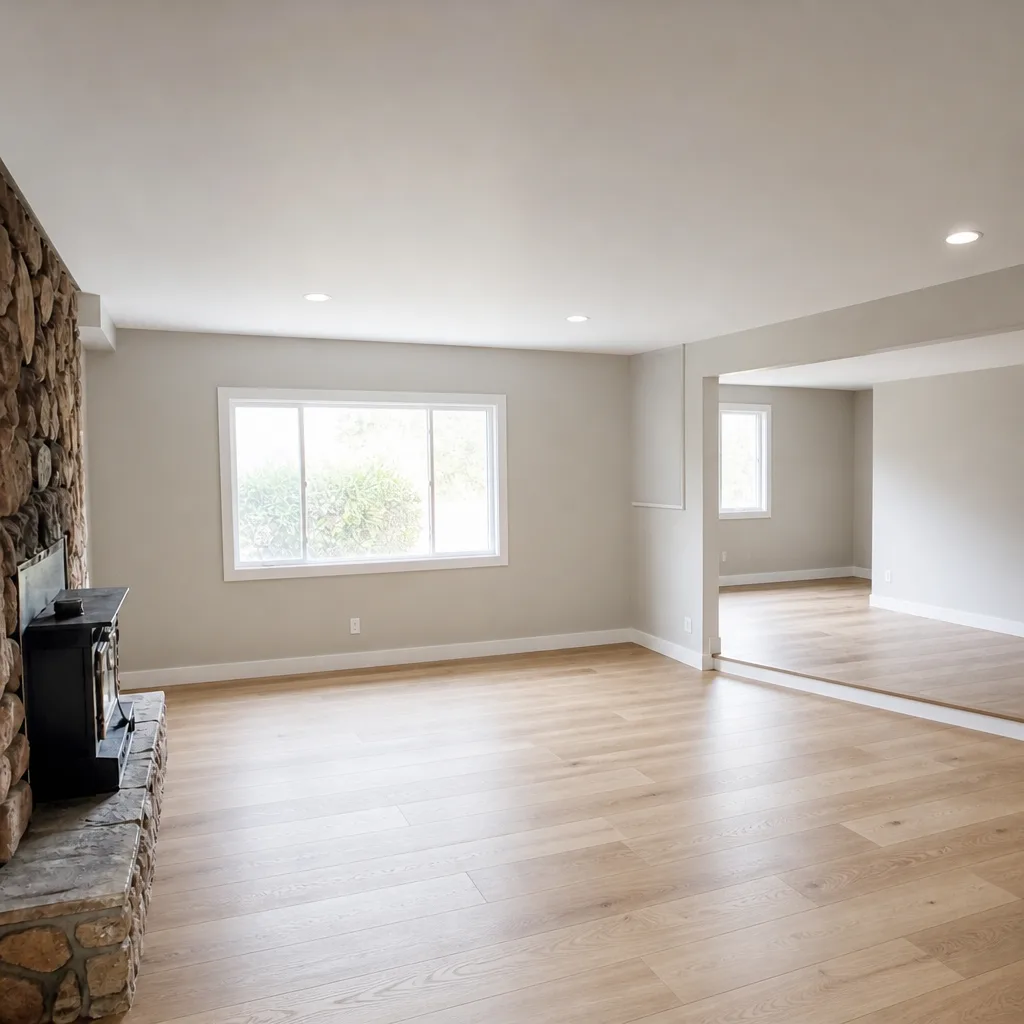
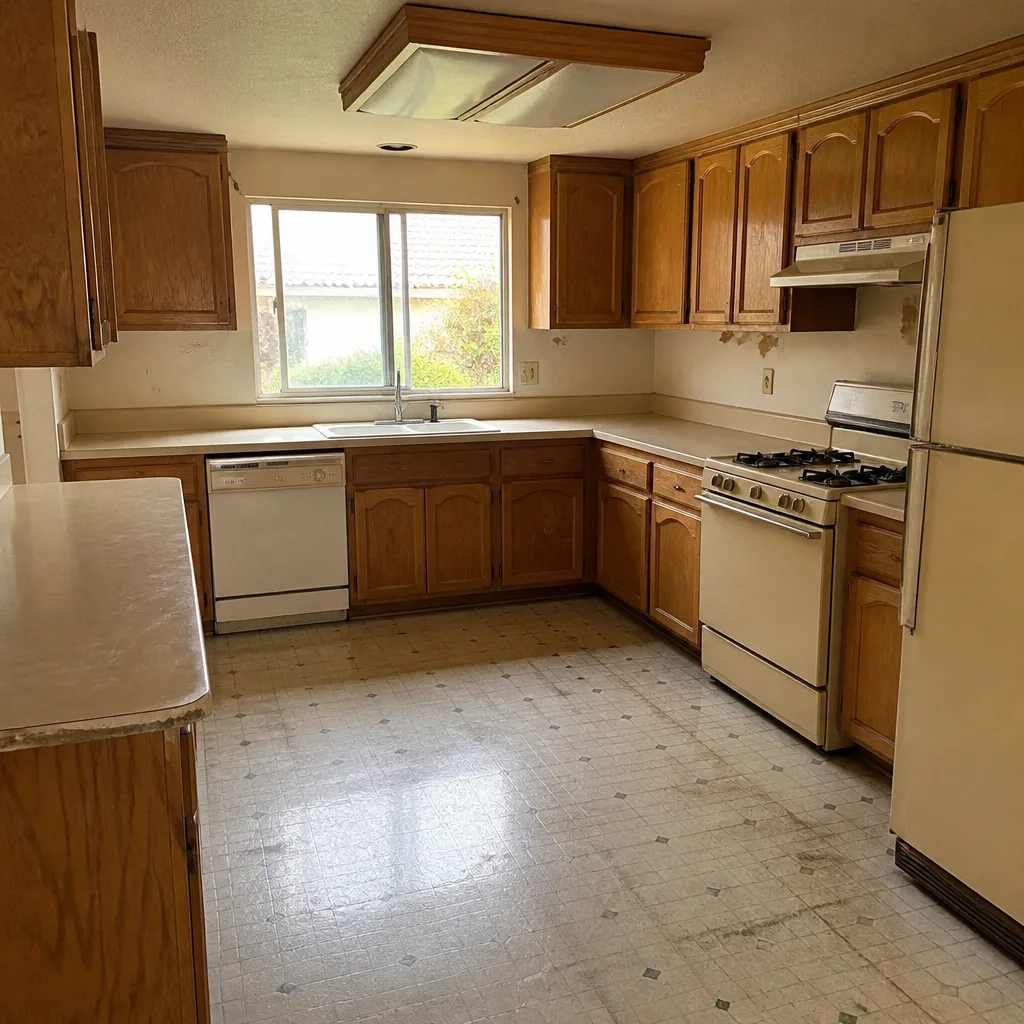
See the difference
 Before
 After
 Before
 After
 Before
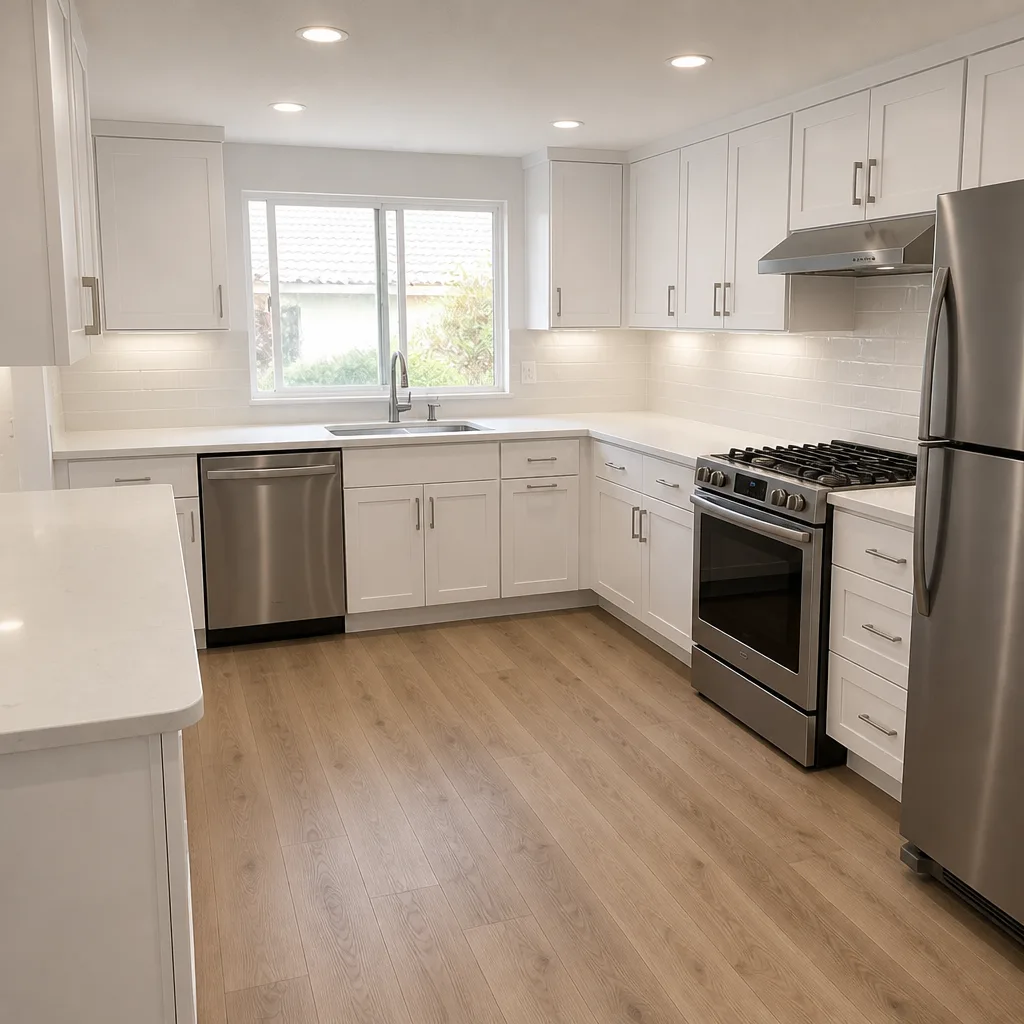 After
Frequently Asked Questions
A stucco crack is serious if it’s diagonal at a window corner, horizontal along the foundation line, wider than 1/8 inch, or visibly changing over a 30-day period. Hairline vertical cracks that don’t widen and don’t align with openings are typically cosmetic shrinkage. Measure and photograph your crack, then check it again in 30 days. If it’s grown, call (877) 752-3951 for an evaluation.
Doors in Yorba Linda homes stick for two main reasons: seasonal humidity swelling of the door slab or frame, and structural movement of the wall assembly from expansive soil. A door that sticks in winter and returns to normal in summer is likely seasonal. A door that sticks progressively worse each year indicates foundation or framing movement that needs professional evaluation.
Do a ground-level roof check twice a year: once after the rainy season ends and once after the Santa Ana wind season. Start with a home remodeling in Yorba Linda checklist that includes granule accumulation in gutters, ridge line straightness, and visible flashing condition. After any severe wind event, do a quick additional check for shingle debris and exposed fasteners.
Efflorescence on an interior wall means water is moving through the wall assembly, dissolving mineral salts, and depositing them on the surface as the water evaporates. The water source is either exterior moisture intrusion or a plumbing leak inside the wall. Cleaning the efflorescence removes the symptom but not the water source. The source needs to be found and fixed.
Heaving pavers are usually a sub-base and drainage problem, not a foundation problem. They indicate that water is saturating the soil beneath the pavers and the sub-base wasn’t built to drain it away. However, if the heaving pavers are adjacent to your foundation and slope toward the house, the drainage failure is actively directing water against your foundation, which can eventually create a foundation problem. A home renovation contractor in Yorba Linda can evaluate both systems together.
A licensed contractor visual inspection is typically free when it’s part of an estimate process. A formal engineering review from a structural engineer typically costs several hundred dollars depending on scope. Start with the contractor walkthrough first. Sundance Contractors offers free estimates in Yorba Linda. Call (877) 752-3951 and we’ll tell you honestly whether your situation warrants an engineer or a repair scope.
The Bottom Line
Construction warning signs in Yorba Linda homes are readable if you know what you’re looking at. Track cracks by pattern and width, not by whether they’re there. Check your roof from the ground after weather events. Watch interior doors and baseboards for movement patterns that tell you what the structure is doing underneath. Look at your hardscape as a drainage indicator as much as an aesthetic feature. And when signals overlap, when a roof edge is failing near a stucco crack in the wall below, get one contractor who can see the whole system. The homes in this city were built well, but they were also built on soil that moves and in a climate that tests exteriors. The homeowner who catches early signals is the homeowner who avoids emergency scopes. That’s the entire point of this guide.
Written by the team at Sundance Contractors, serving Yorba Linda since 2018.